

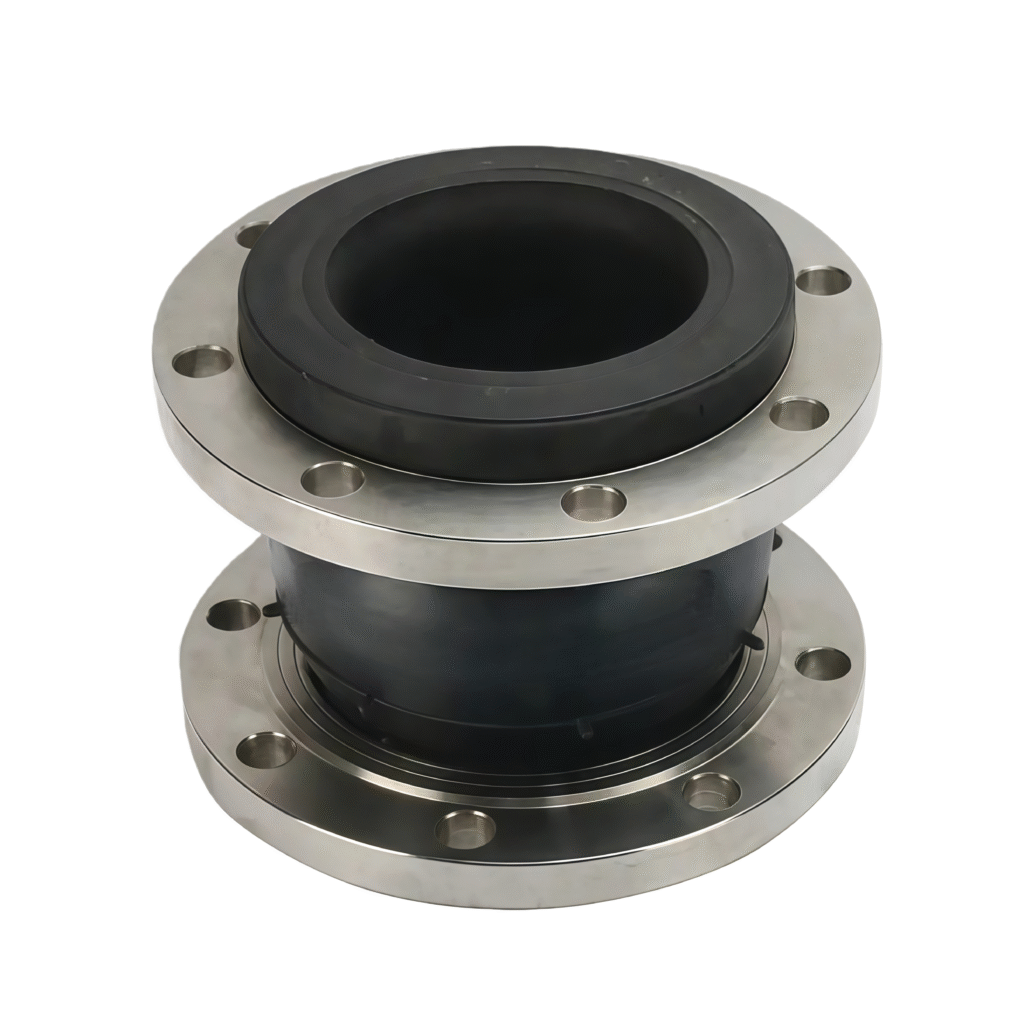
Stainless steel flange rubber joint
| size | DN25 to DN3000 |
| pressure | PN6~PN40 |
| temperature | -15 ~ 80℃ |
| Flange Standard | DIN, ANSI, JIS etc |
| Flange material | Stainless Steel 304, 316, 321 etc |
| rubber material | EPDM, natural rubber, NBR rubber and neoprene rubber |
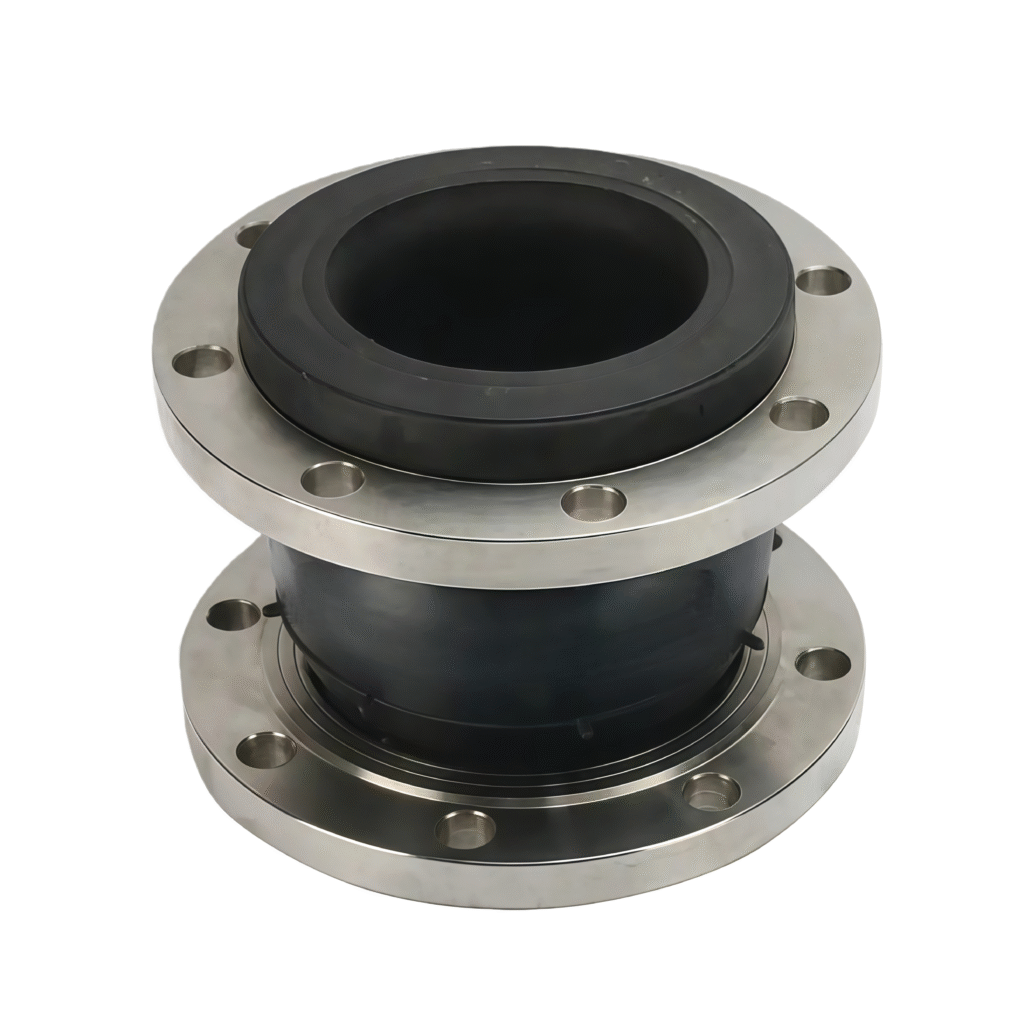
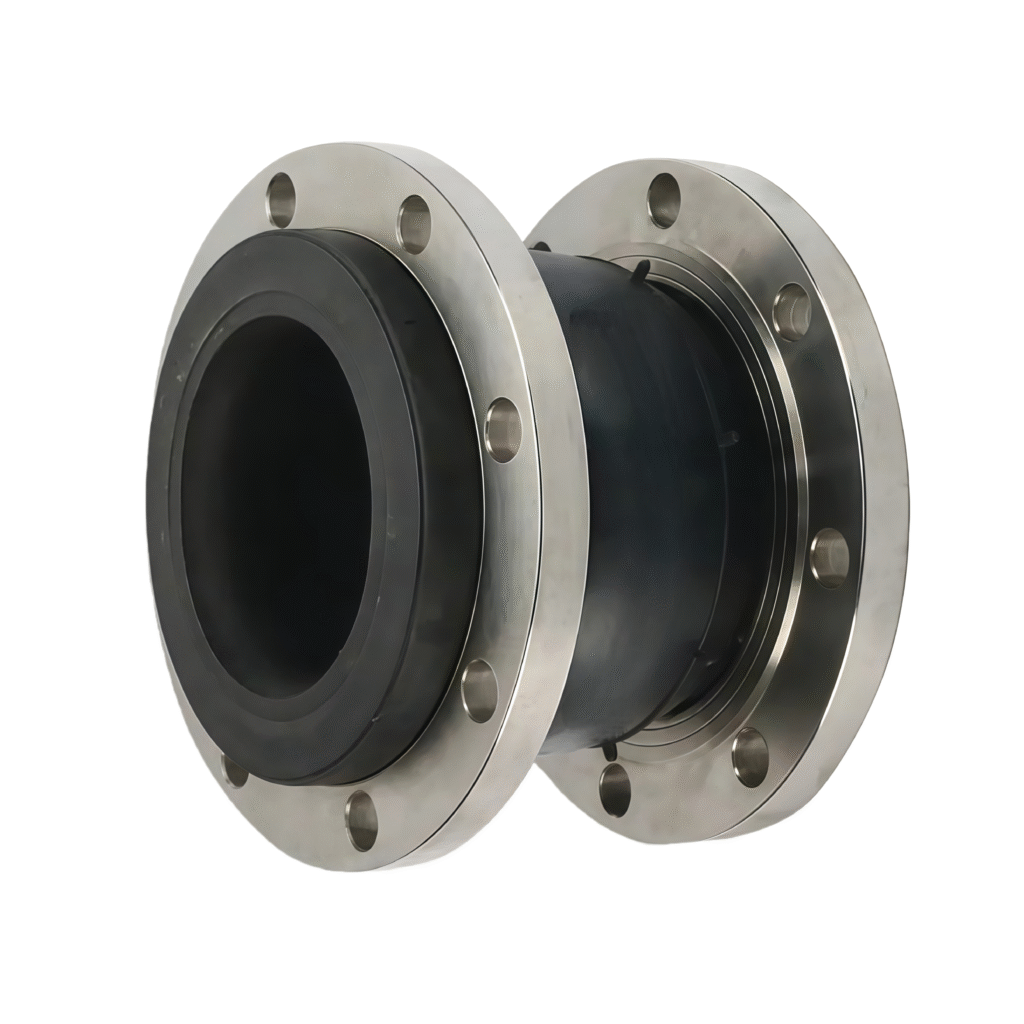
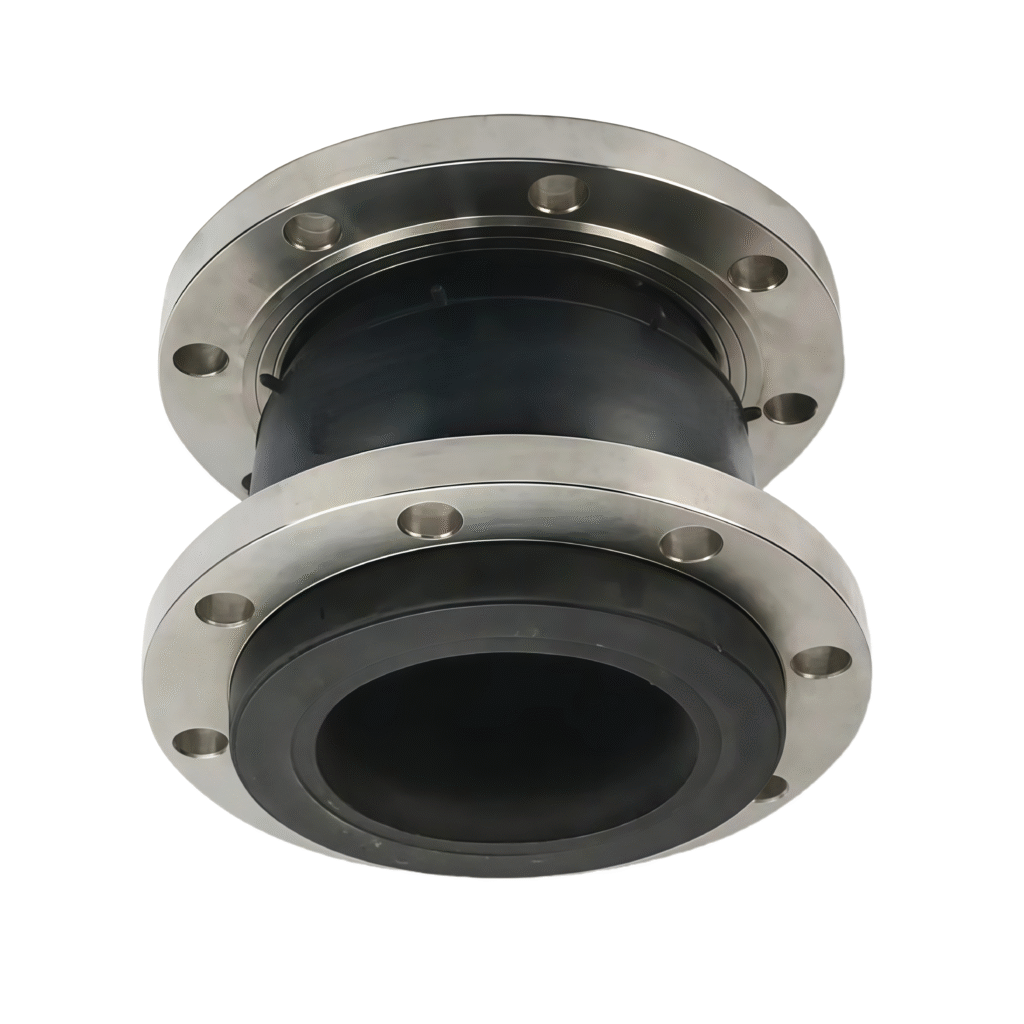
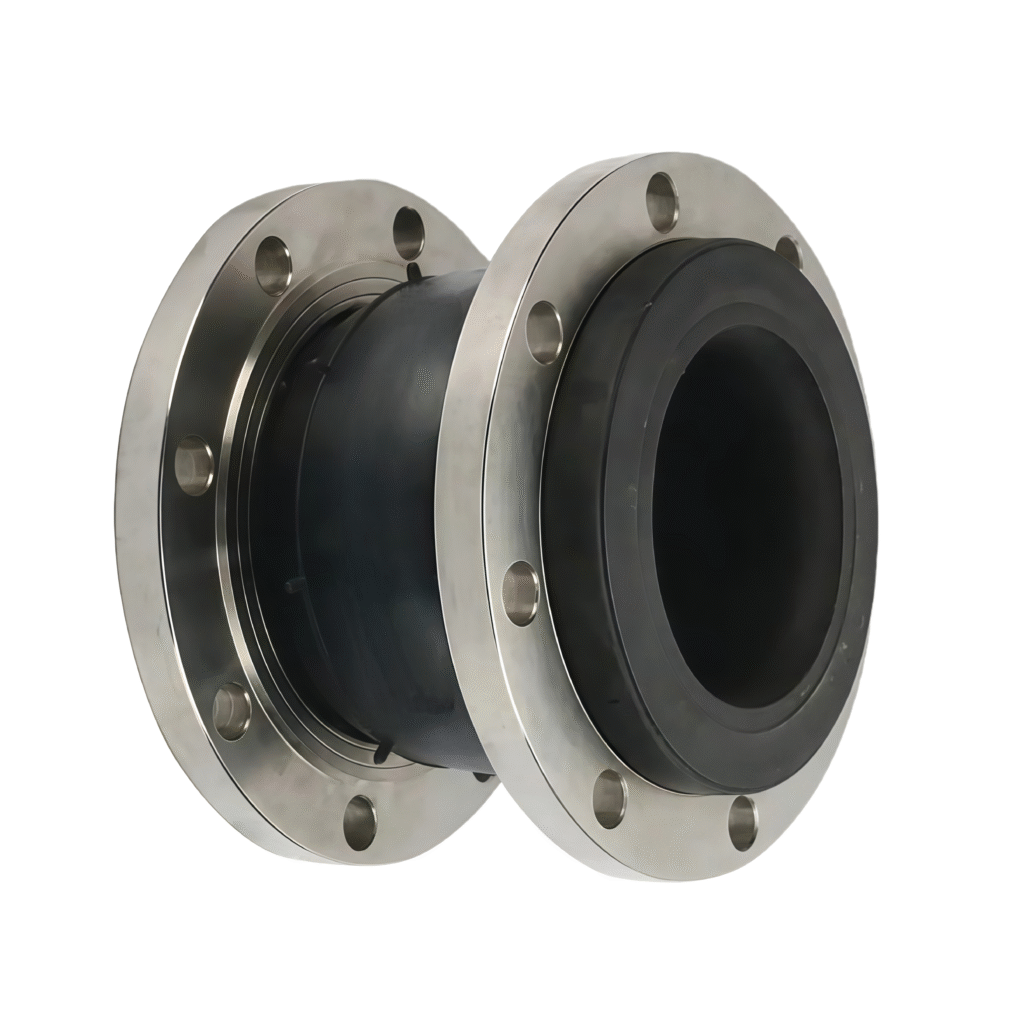
Details Overview
Precision-molded stainless steel rubber joints can also be used as shock-absorbing pump joints or expansion joints to absorb pipeline movement.
Stainless rubber steel joints are ideal for HVAC or industrial applications requiring flexible joints to absorb axial, lateral, or angular movement of pipelines. They are also superior to braided metal joints in absorbing mechanical vibrations and noise.
Stainless rubber steel joints are precision-molded using a hydraulic press. The spherical design ensures that internal pressure is applied in all directions and that force is evenly distributed over a larger area. The spherical design acts like a free-flowing arch structure, reducing turbulence and elongation caused by pressure thrust.
These joints are made from high-quality EPDM rubber tubing and sheathing, reinforced with nylon cord. Special elastomer materials such as neoprene, acrylate, vinyl chloride, and butyl rubber are also available. Standard EPDM material is superior to comparable neoprene joints due to its higher temperature resistance and physical properties. The galvanized steel floating flange features an embedded design that perfectly fits the rubber ball end of the expansion joint and can be easily rotated, thus speeding up installation.
Stainless rubber steel joints are ideal for absorbing minor stress displacements, noise, and vibrations generated by mechanical equipment. These single-ball fittings have end face dimensions that match the corresponding reel-in expansion joint dimensions, facilitating replacement. The shorter end face dimensions mean space savings in the piping system and simplify operation and installation.
Stainless rubber steel fittings are manufactured to meet or exceed the pressure, motion, and dimensional ratings specified by the Rubber Expansion Joints Division of the American Fluid Sealing Association.
Sealing Information: When installing rubber expansion joints, installers should ensure that bolt forces are evenly distributed to provide optimal clamping force and prevent connection leaks. When expansion joints are installed in non-ferrous metal piping systems (such as PVC), it may be necessary to reinforce the mating flanges to increase their rigidity.
Product Specifications
[table id=1 /]
Applicable Environment
[table id=13 /]
Technical parameters
[table id=10 /]